
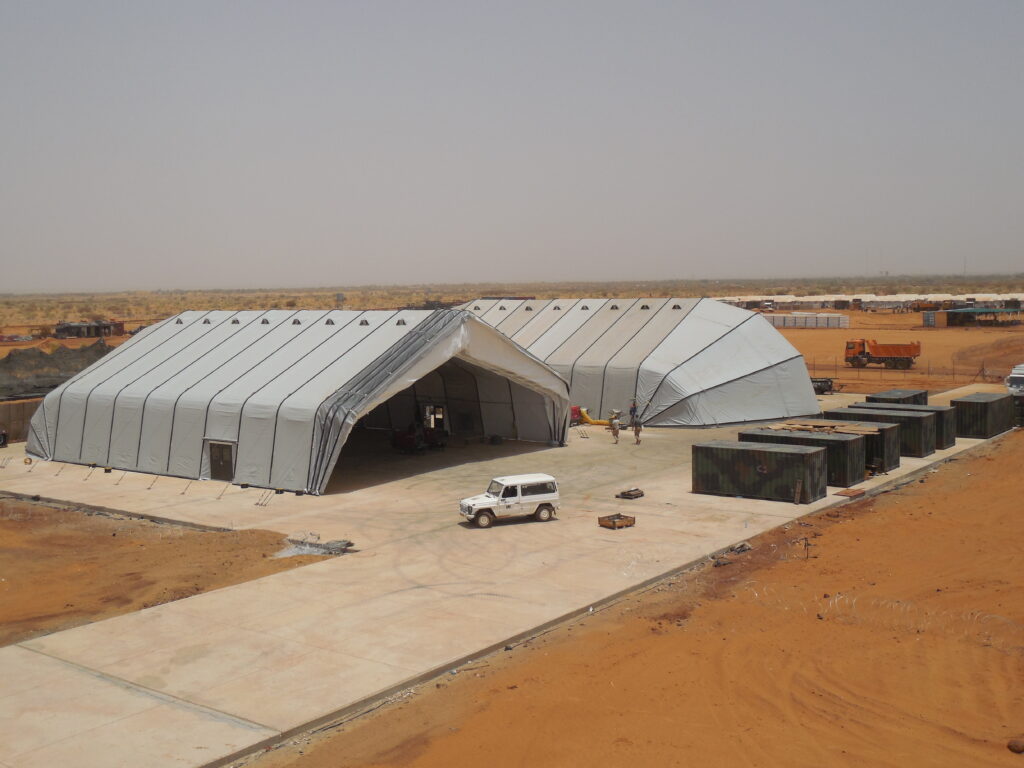
In aviation and military operations, facilities are not just buildings—they are operational assets.
Aircraft need protection. Equipment must stay mission-ready. Maintenance teams require space to work efficiently. And in many cases, organizations need solutions that can be deployed faster and adapted more easily than traditional construction allows.
That is one reason tension fabric structures for aircraft hangars have become increasingly common across aviation, military, and industrial environments.
Whether supporting military aircraft, maintenance operations, temporary deployments, or industrial aviation needs, tension fabric hangars offer practical advantages that traditional structures sometimes cannot.
But not all aircraft hangars are the same.
Choosing the right structure—and ensuring it is installed, maintained, and repaired correctly—plays a major role in long-term performance.
At Oilcanners Construction Consulting, aviation and military clamshell structures are not theoretical. With more than 30 years of experience working on clear-span tension fabric buildings, aircraft hangars, military facilities, inspections, refurbishments, relocations, and field advisory projects, the company understands what works in demanding real-world environments. Past experience includes projects supporting military aviation, NASA programs, Air Force personnel, Lockheed Martin teams, and international operations where reliability mattered.
In this guide, we will explain why military and aviation organizations continue choosing tension fabric structures, what benefits they offer, and what owners should know when evaluating aircraft hangar solutions.
What Is a Tension Fabric Aircraft Hangar?
A tension fabric aircraft hangar is a clear-span structure built using a metal framework and a tensioned fabric membrane.
Unlike traditional buildings that often rely on interior support columns, these structures are designed to create large unobstructed interior spaces, making them especially practical for aviation operations.
These hangars are commonly used for:
- Aircraft storage
- Maintenance facilities
- Military aviation support
- Temporary deployment operations
- Equipment protection
- Mission support facilities
- Aviation overflow space
Because aircraft require room for maneuverability, maintenance access, and operational flexibility, clear-span design becomes a major advantage.
Why Aviation Teams Choose Tension Fabric Aircraft Hangars
Aircraft are valuable assets.
Whether used for military, commercial, or industrial purposes, protecting aircraft from weather and environmental exposure matters.
Tension fabric structures offer several advantages that make them attractive for aviation use.
Large Clear-Span Interior Space
One of the biggest reasons aviation teams choose fabric hangars is simple:
Space.
Traditional structures often contain interior support columns that reduce maneuverability.
Aircraft hangars need open, functional layouts.
Clear-span tension fabric structures provide:
- Better aircraft access
- Improved maintenance workflow
- More operational flexibility
- Space for oversized equipment
- Fewer structural obstructions
For maintenance crews, unobstructed space can improve efficiency and safety.
For aircraft owners, it simply makes operations easier.
Faster Deployment Compared to Traditional Construction
In military and aviation environments, timing matters.
Organizations often cannot afford to wait extended periods for traditional construction timelines.
One major benefit of tension fabric structures is that they can often be deployed much faster than conventional buildings.
This makes them practical for:
- Military readiness
- Temporary operations
- Emergency aviation needs
- Rapid facility expansion
- Remote locations
That said, speed should never come at the expense of proper installation.
Aviation facilities still require experienced oversight, structural accuracy, engineering coordination, and proper membrane performance to ensure long-term reliability.
Oilcanners Construction Consulting works directly with engineering support to help ensure hangars are installed and maintained according to intended design specifications—not simply erected as quickly as possible.
Flexibility and Relocatability
Unlike many permanent buildings, some tension fabric hangars can be relocated if operational needs change.
That flexibility becomes especially valuable for:
- Military deployments
- Temporary aviation programs
- Expansion projects
- Evolving operational requirements
In many cases, facilities can be:
- Deconstructed
- Containerized
- Transported
- Refurbished
- Reassembled
However, relocation should never be approached casually.
Proper procedures matter.
Oilcanners has experience supporting deconstruction and relocation projects involving specialized clamshell hangars and military structures in challenging environments.
Why Military Operations Frequently Use Fabric Hangars
Military environments demand flexibility.
Operational needs change quickly, and facilities often need to adapt just as fast.
Tension fabric structures are commonly used because they offer a balance between:
- Durability
- Speed of deployment
- Cost efficiency
- Adaptability
- Operational flexibility
Military teams commonly use aircraft hangars for:
- Maintenance operations
- Equipment protection
- Aircraft storage
- Temporary mission support
- Logistics operations
Oilcanners Construction Consulting has experience supporting military-related tension fabric and clamshell structure projects, including field advisory roles, inspections, refurbishment, construction oversight, maintenance, and crew training.
Past experience includes:
- Training U.S. Air Force personnel at MacDill Air Force Base
- Supporting hangar construction at Redstone Arsenal
- Working on aviation projects involving military aircraft environments
- Supporting international military operations, including projects involving the Royal Netherlands Air Force and overseas aviation support facilities.
This kind of experience matters because military and aviation projects often leave little room for mistakes.
Tension Fabric Hangars in Specialized Aviation Environments
Aircraft hangars are not always one-size-fits-all.
Different aircraft programs may require different considerations depending on:
- Aircraft size
- Maintenance access
- Environmental exposure
- Location
- Engineering requirements
- Mission-critical operations
Oilcanners Construction Consulting has experience supporting specialized aviation-related hangar projects involving demanding operational environments.
Past advisory and support experience includes projects connected to:
- NASA aviation programs
- Aircraft hangar support for military aviation teams
- Lockheed Martin aviation-related projects
- International aviation operations.
While every project is different, one thing remains consistent:
Proper planning and experienced oversight help avoid costly problems later.
Common Mistakes When Choosing an Aircraft Hangar
One of the biggest misconceptions is assuming all fabric hangars are essentially the same.
In reality, performance often depends on factors such as:
Installation Quality
Improper installation may affect:
- Structural performance
- Weather resistance
- Long-term durability
- Maintenance needs
Poor Long-Term Planning
Hangars should be selected based on intended operational needs—not just short-term cost.
Ignoring Maintenance Requirements
Like any facility, aircraft hangars require inspections and maintenance over time.
Small problems are often easier to fix before they become expensive repairs.
Hiring Inexperienced Contractors
Traditional building experience does not always translate into clamshell or tension fabric expertise.
Aircraft facilities require specialized understanding.
Oilcanners Construction Consulting has experience working across multiple clamshell systems and manufacturers, including CB-designed systems and fabric structures such as Bigtop, Shasta, and Celina, helping ensure facilities are installed, maintained, repaired, and refurbished according to intended design standards.
Why Maintenance Matters for Aircraft Hangars
Installing the structure is only part of the equation.
Long-term performance often depends on regular maintenance and inspections.
Routine evaluations may help identify:
- Fabric wear
- Hardware issues
- Structural movement
- Corrosion concerns
- Tension adjustments
- Repair needs
Preventative maintenance can often help avoid unexpected operational disruptions.
That matters even more in aviation and military environments where reliability is critical.
Oilcanners provides inspections, maintenance support, repairs, refurbishment services, and follow-up reporting to help owners maximize the lifespan and performance of existing facilities.
Frequently Asked Questions About Aircraft Fabric Hangars
Why are tension fabric structures used for aircraft hangars?
They provide large clear-span interiors, flexibility, faster deployment, and practical operational space for aircraft storage and maintenance.
Are fabric aircraft hangars durable?
When properly designed, installed, and maintained, tension fabric structures are built to perform in demanding environments.
Can military aircraft hangars be relocated?
Many can be deconstructed and reassembled depending on design and operational requirements.
Do aircraft fabric hangars require maintenance?
Yes. Regular inspections help identify wear, structural concerns, and replacement needs before larger problems develop.
What industries use aircraft fabric hangars?
Military, aviation, aerospace, industrial aviation, logistics, and specialized maintenance operations commonly use these structures.
Looking for an Experienced Aircraft Hangar Partner?
Whether you need a new aircraft hangar installed, an existing structure inspected, repairs completed, maintenance support, or help relocating an aviation facility, experience matters.
Oilcanners Construction Consulting brings more than 30 years of hands-on experience working with clamshell buildings and tension fabric structures across military, aviation, and industrial environments. From field advisory services and crew training to inspections, maintenance, refurbishment, and turnkey support, the goal is simple: help ensure every facility performs as designed.
Contact Oilcanners Construction Consulting today to discuss your aircraft hangar or tension fabric structure project.
