
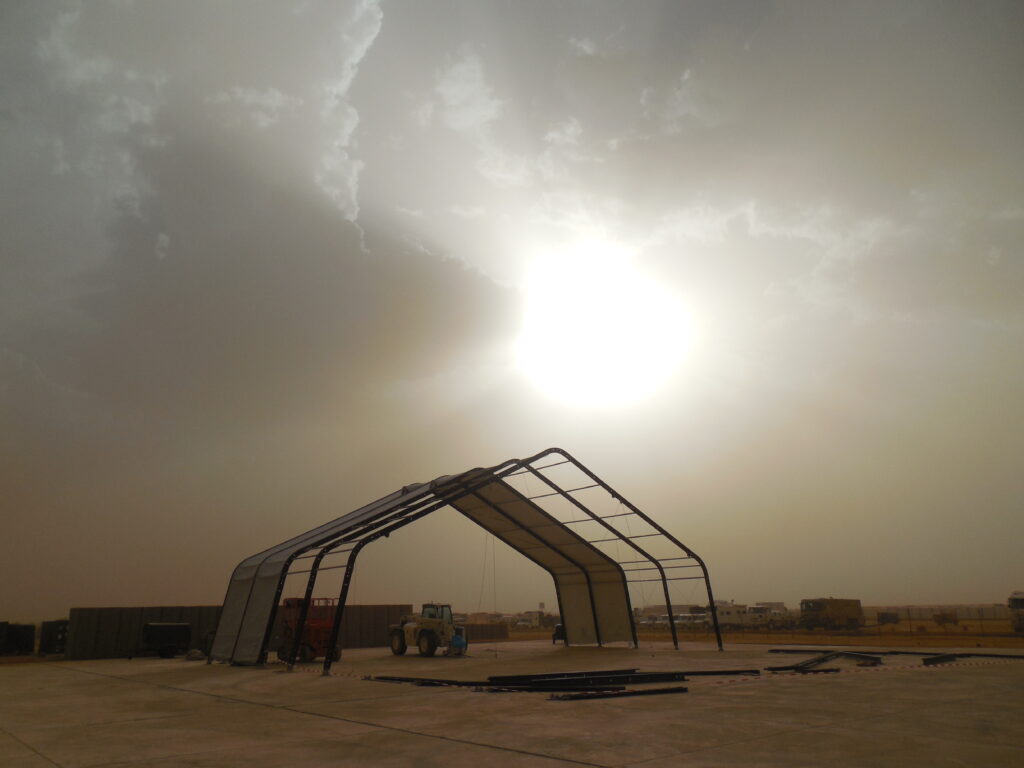
When organizations begin researching a clamshell building installation, one of the first questions they usually ask is:
“What does the installation process actually involve?”
Whether the structure is being used as an aircraft hangar, military support facility, industrial workspace, equipment shelter, or large-scale storage building, successful installation involves much more than assembling steel and stretching fabric.
The reality is that proper clamshell building installation requires planning, experience, engineering coordination, specialized knowledge, and attention to detail.
Done correctly, a clamshell building can provide decades of reliable use, flexibility, and operational value. Done incorrectly, installation shortcuts often lead to avoidable maintenance issues, structural problems, and expensive repairs later.
At Oilcanners Construction Consulting, clamshell buildings are not something learned from manuals alone. With more than 30 years of experience working on tension fabric structures—including aviation, military, refurbishment, inspection, relocation, and construction advisory projects—the team understands what separates a properly built structure from one that creates long-term headaches.
In this guide, we will explain what to expect during a clamshell building installation, the factors that affect project success, and why expertise matters throughout the process.
What Is a Clamshell Building Installation?
A clamshell building installation involves the planning, coordination, construction, and proper assembly of a clear-span, metal-framed tension fabric structure.
These buildings are commonly used for:
- Aircraft hangars
- Military operations
- Industrial equipment storage
- Maintenance facilities
- Fleet protection
- Warehousing
- Temporary operational facilities
Unlike traditional buildings, clamshell structures require specialized knowledge because performance depends on proper assembly, alignment, anchoring systems, membrane tension, and engineering specifications.
In many cases, the long-term success of the building starts before construction even begins.
Every Clamshell Building Installation Starts With Planning
One of the biggest misconceptions people have about clamshell buildings is that they go up quickly, so the process must be simple.
While installation timelines are often faster than traditional construction, proper planning still matters.
Before a structure is erected, experienced contractors typically evaluate several key factors.
Site Conditions
The installation site itself plays a major role in project success.
Questions often include:
- What are the ground conditions?
- What anchoring system is required?
- How will drainage affect performance?
- What environmental factors exist?
- Are there access limitations for crews and equipment?
A site that looks straightforward on paper can sometimes introduce unexpected complications in the field.
That is why experienced evaluation matters early in the process.
Intended Use of the Structure
Not every clamshell building serves the same purpose.
A facility intended for aircraft storage will have very different considerations than one used for:
- Heavy equipment storage
- Vehicle maintenance
- Industrial operations
- Temporary military deployment
- Construction staging
The size, span, access requirements, and operational demands of the structure all influence installation planning.
Oilcanners Construction Consulting works directly with engineering support to help ensure facilities are installed according to intended use and manufacturer design standards—not simply assembled to “make it work.”
What Happens During Clamshell Building Installation?
Although every project differs, most clamshell building installations follow a general process.
The exact steps vary depending on project size, environment, and complexity.
Site Preparation
Before installation begins, the project area must be prepared.
Depending on the structure, this may include:
- Ground preparation
- Foundation work
- Anchoring systems
- Equipment staging
- Site access planning
The goal is to create the proper conditions for long-term structural performance.
Skipping preparation or rushing this phase often creates avoidable issues later.
Structural Frame Assembly
After the site is prepared, crews begin assembling the structural framework.
This phase requires precision.
Frame alignment, structural integrity, and manufacturer specifications all matter.
What may seem like small deviations during installation can impact:
- Structural performance
- Fabric tension
- Weather resistance
- Long-term durability
- Maintenance needs
Experienced oversight during this stage often helps prevent future problems before they begin.
Fabric Membrane Installation
Once the frame system is complete, the tension fabric membrane is installed.
This is one of the most important phases of the project.
Fabric systems are engineered to perform under very specific conditions.
Proper membrane installation affects:
- Weather protection
- Structural performance
- Wind resistance
- Longevity
- Maintenance requirements
Improper tensioning or shortcuts during installation can lead to premature wear or performance issues over time.
This is one reason many organizations choose experienced crews or field advisory support during installation.
Oilcanners Construction Consulting has experience working across multiple tension fabric systems and manufacturers, helping ensure structures are installed and repaired according to intended design specifications.
Why Experience Matters During Installation
Not every contractor understands clamshell buildings.
Traditional construction experience does not automatically translate into expertise with tension fabric structures.
These facilities involve unique considerations that can significantly affect long-term performance.
Experience becomes especially important when dealing with:
- Aircraft hangars
- Military applications
- Large-span structures
- Refurbishment projects
- Existing facility modifications
- Relocations
- Challenging environmental conditions
Oilcanners Construction Consulting has experience with multiple clamshell building systems and manufacturers, including CB-designed systems and structures such as Bigtop, Shasta, and Celina. The company also provides field advisory support, crew supervision, inspections, refurbishment, and turnkey project capabilities.
Turnkey Installation vs Field Advisory Services
Not every project requires the same level of support.
Some organizations need a turnkey clamshell building installation, where experienced professionals provide:
- Crew
- Equipment
- Tools
- Oversight
- Construction support
Other organizations already have labor resources available but need experienced supervision to ensure installation is completed correctly.
In those situations, field advisory services can help guide crews through proper procedures while reducing costly mistakes.
Oilcanners has extensive experience providing both turnkey support and field advisory services for clamshell and tension fabric structure projects. Past work has included military, aviation, industrial, and international projects requiring high levels of coordination and accuracy.
Common Installation Mistakes That Cause Problems Later
One of the biggest issues with clamshell structures is that mistakes during installation are not always obvious right away.
In many cases, problems show up months or years later.
Some of the most common issues include:
Improper Alignment
Frame alignment matters more than many people realize.
Minor inconsistencies can affect long-term structural performance.
Incorrect Membrane Tension
Fabric tension affects durability, weather resistance, and performance.
Poor tensioning can create unnecessary wear or shorten the lifespan of components.
Skipping Manufacturer Requirements
Every structure has engineering and design specifications that should be followed carefully.
Taking shortcuts often becomes expensive later.
Using Inexperienced Crews
General construction experience does not necessarily mean experience with clamshell structures.
Tension fabric systems require specialized understanding.
Ignoring Maintenance Planning
Installation is only the beginning.
Routine inspections and maintenance help maximize the lifespan of the structure.
Oilcanners Construction Consulting provides inspection, maintenance, repair, and refurbishment services to help owners protect their investment long after installation is complete.
Can Existing Clamshell Buildings Be Reinstalled or Relocated?
Yes.
In many cases, clamshell buildings can be deconstructed, transported, refurbished, and reassembled.
However, relocation requires proper planning.
This often includes:
- Structural inspection
- Documentation
- Labeling components
- Containerization
- Repair evaluation
- Reassembly planning
Oilcanners has experience supporting relocation and deconstruction projects involving specialized clamshell structures in both domestic and international environments.
Frequently Asked Questions About Clamshell Building Installation
How long does clamshell building installation take?
Project timelines vary depending on building size, site conditions, complexity, and intended use. One advantage of clamshell structures is that installation is often faster than conventional construction.
Can an existing crew install a clamshell building?
In some cases, yes. However, many organizations choose field advisory support to help ensure installation is completed correctly and according to specifications.
Are clamshell buildings customizable?
Yes. Many structures can be configured to meet different operational requirements depending on intended use.
What industries commonly use clamshell buildings?
Common industries include aviation, military, industrial operations, construction, equipment storage, and logistics.
Why does installation experience matter?
Small mistakes during installation can affect long-term durability, performance, and maintenance requirements. Experienced oversight helps reduce costly issues later.
Looking for an Experienced Clamshell Building Installation Team?
Whether you need a turnkey clamshell building installation, field advisory support, inspections, refurbishment, relocation assistance, or long-term maintenance, experience matters.
Oilcanners Construction Consulting brings more than 30 years of experience working on clamshell buildings and clear-span tension fabric structures in aviation, military, and industrial environments. From crew support and engineering coordination to inspections and repairs, the focus is always the same: ensuring every structure is built and maintained as designed.
Contact Oilcanners Construction Consulting today to discuss your project and request a quote.
