
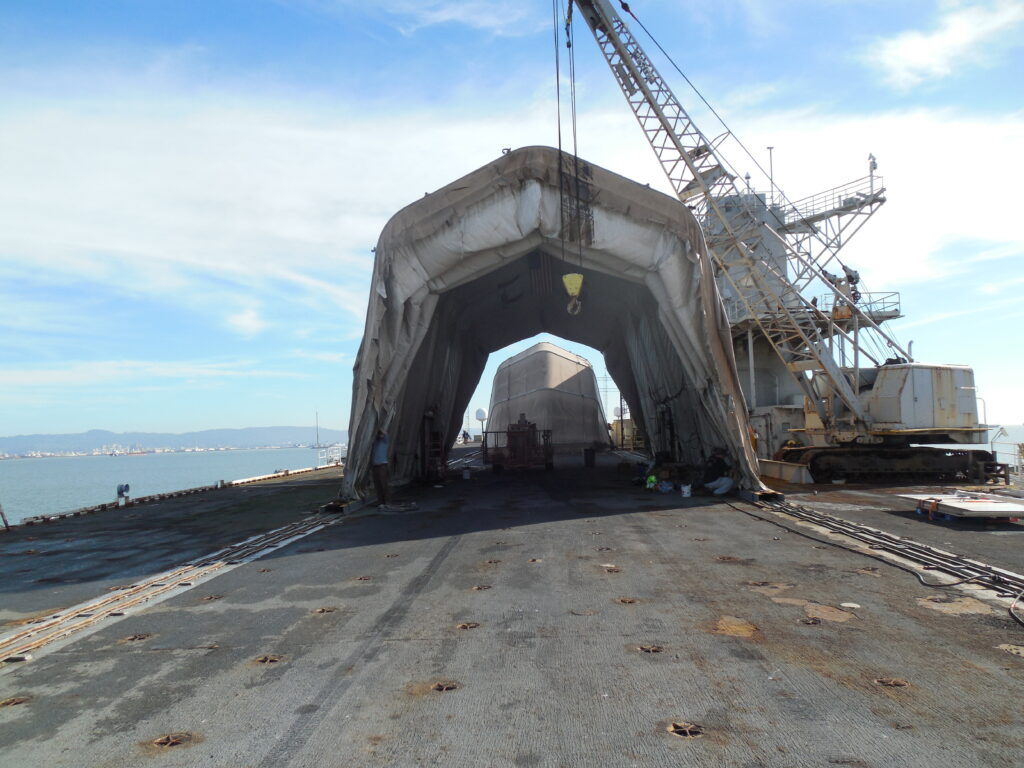
One of the biggest advantages of a clamshell building is something many owners do not fully realize at first:
In many cases, these structures can be relocated.
Unlike traditional permanent buildings, many clamshell and tension fabric structures are designed with flexibility in mind. That means a facility used today for aircraft maintenance, equipment storage, military operations, or industrial work may potentially be moved, refurbished, and reassembled in another location when operational needs change.
However, relocation is not as simple as taking apart a structure and rebuilding it somewhere else.
Done correctly, a clamshell building relocation can preserve the life of the structure and provide years of continued value.
Done incorrectly, it can create expensive problems, missing components, structural issues, or performance concerns that become much harder to fix later.
At Oilcanners Construction Consulting, relocation is not an afterthought—it is part of decades of hands-on experience working with clamshell buildings and tension fabric structures. Over the years, projects have included deconstruction, containerization, refurbishment, inspections, and reconstruction in military, aviation, industrial, and highly specialized environments. That experience matters because successful relocation starts long before the first bolt is removed.
In this guide, we will explain when clamshell buildings can be relocated, what the process generally involves, common mistakes owners make, and why experienced oversight matters.
Can Clamshell Buildings Actually Be Relocated?
In many cases, yes.
One of the reasons clamshell buildings remain popular in aviation, military, and industrial environments is their adaptability.
Depending on the structure and condition, many clamshell buildings can be:
- Deconstructed
- Transported
- Refurbished
- Reconfigured
- Reassembled
This flexibility makes them especially valuable for organizations where operational needs may change over time.
Relocation is commonly considered when:
- A facility is no longer needed at its current site
- Operations are moving to another location
- Equipment or aircraft storage needs change
- Temporary projects are completed
- Military or industrial deployments shift
- Existing structures still have usable life remaining
In many situations, relocating an existing structure may be more practical than starting over entirely.
That said, not every structure is automatically a good candidate for relocation.
Condition, age, maintenance history, and intended future use all matter.
Why Organizations Choose to Relocate Clamshell Buildings
Every project is different, but there are several common reasons owners explore relocation.
Operational Flexibility
Business and operational needs evolve.
A facility that made sense five years ago may no longer be in the right location today.
Relocating a clamshell building may allow organizations to adapt without abandoning an existing investment.
Cost Savings Compared to Replacement
In some cases, relocating and refurbishing an existing facility may make more financial sense than constructing a brand-new structure.
Depending on the condition of the building, owners may be able to extend the useful life of the structure while avoiding unnecessary replacement costs.
An experienced evaluation can often help determine whether relocation is the right decision.
Military and Aviation Needs
Military and aviation environments often require flexibility.
Temporary operations, mission changes, aircraft support needs, and evolving facility demands frequently make relocatable structures attractive.
This is one reason tension fabric structures are widely used in aviation and military operations.
Oilcanners Construction Consulting has experience supporting military-related projects involving aircraft hangars, aviation support facilities, inspections, relocation, refurbishment, and construction advisory services in demanding operational environments.
What Is Involved in Relocating a Clamshell Building?
A successful relocation project involves much more than simply disassembling a building.
The process requires planning, evaluation, organization, and experience.
While every project is different, relocation often involves several key phases.
Initial Inspection and Evaluation
Before relocation begins, the structure should typically be inspected.
The goal is to understand:
- Current condition
- Structural wear
- Missing or damaged components
- Fabric condition
- Hardware condition
- Repair needs
This helps determine whether refurbishment or replacement components may be necessary before reassembly.
In many cases, relocation becomes an opportunity to improve or extend the life of the facility.
Deconstruction
The structure must then be carefully disassembled.
This phase matters more than many owners realize.
Improper deconstruction may lead to:
- Damaged components
- Missing hardware
- Mislabeling
- Structural issues during reassembly
- Increased repair costs later
Organization is critical.
Experienced teams typically document, label, and prepare components carefully to help ensure reconstruction goes smoothly.
Oilcanners has experience deconstructing specialized clamshell structures in challenging environments, including aviation, marine, military, and industrial settings. Past projects have included hangar deconstruction and containerization for transport.
Containerization and Transportation
Once deconstructed, materials often need to be properly organized and containerized for transport.
This step helps protect components and simplify reconstruction later.
Without proper organization, relocation can quickly become far more difficult and expensive than expected.
Planning matters.
Refurbishment and Repairs
Relocation often presents a good opportunity to address wear and maintenance issues.
Depending on the condition of the structure, owners may decide to:
- Replace worn components
- Repair damaged sections
- Upgrade hardware
- Reconfigure layout
- Improve long-term performance
This step can often extend the useful life of the building significantly.
Reassembly at the New Site
Once relocated, the structure must be reinstalled according to engineering and manufacturer requirements.
Proper reconstruction matters.
Small mistakes during reassembly may eventually create:
- Structural issues
- Premature wear
- Weather performance concerns
- Maintenance problems
That is one reason experienced oversight is often valuable during relocation projects.
Oilcanners Construction Consulting works directly with engineering support and manufacturer requirements to help ensure clamshell buildings are rebuilt according to intended design—not simply put back together quickly.
Common Mistakes During Clamshell Building Relocation
Not all relocation projects go smoothly.
Some of the most expensive problems often come from preventable mistakes.
Skipping the Inspection Phase
Failing to evaluate the structure before relocation may create unexpected surprises later.
An inspection often helps owners understand repair needs before reconstruction begins.
Poor Documentation and Labeling
Missing parts or improperly labeled components can slow down reconstruction significantly.
Organization matters.
Trying to Reuse Damaged Components
Not every component should automatically be reused.
An experienced evaluation helps determine what should be repaired or replaced.
Hiring Inexperienced Crews
Relocating a clamshell building is different from traditional construction work.
Experience with tension fabric systems matters.
Oilcanners Construction Consulting has experience with multiple clamshell systems and manufacturers, including CB-designed systems and tension fabric structures such as Bigtop, Shasta, and Celina, helping ensure relocation projects are completed according to intended structural requirements.
Can Older Clamshell Buildings Still Be Relocated?
In many cases, yes.
Older structures may still have substantial usable life remaining.
However, the decision often depends on:
- Structural condition
- Maintenance history
- Fabric condition
- Repair needs
- Intended future use
Sometimes refurbishment during relocation makes the most sense.
Other times, replacement may be more practical.
A professional inspection usually helps determine the best path forward.
Frequently Asked Questions About Relocating Clamshell Buildings
Can all clamshell buildings be relocated?
Not necessarily. Suitability depends on condition, design, and intended future use.
Is relocating a clamshell building cheaper than replacing it?
Sometimes. In many cases, relocation and refurbishment may be more cost-effective than a full replacement, but every project is different.
What happens if parts are damaged during relocation?
Damaged components may need to be repaired or replaced before reconstruction.
Can a relocated clamshell building be reconfigured?
In many cases, yes. Some structures may be adapted to fit updated operational needs.
Why is experience important during relocation?
Relocation involves deconstruction, documentation, transport, repairs, engineering considerations, and reconstruction. Small mistakes often create larger problems later.
Need Help Relocating a Clamshell Building?
Whether you are considering relocating an aircraft hangar, refurbishing an existing facility, or evaluating whether your structure is worth moving, experience matters.
Oilcanners Construction Consulting brings more than 30 years of hands-on experience working with clamshell buildings and tension fabric structures in military, aviation, industrial, and specialized environments. From inspections and deconstruction to refurbishment, relocation support, and reassembly oversight, the focus remains the same: helping ensure every structure continues performing as designed.
Contact Oilcanners Construction Consulting today to discuss your relocation project or request an evaluation.
