
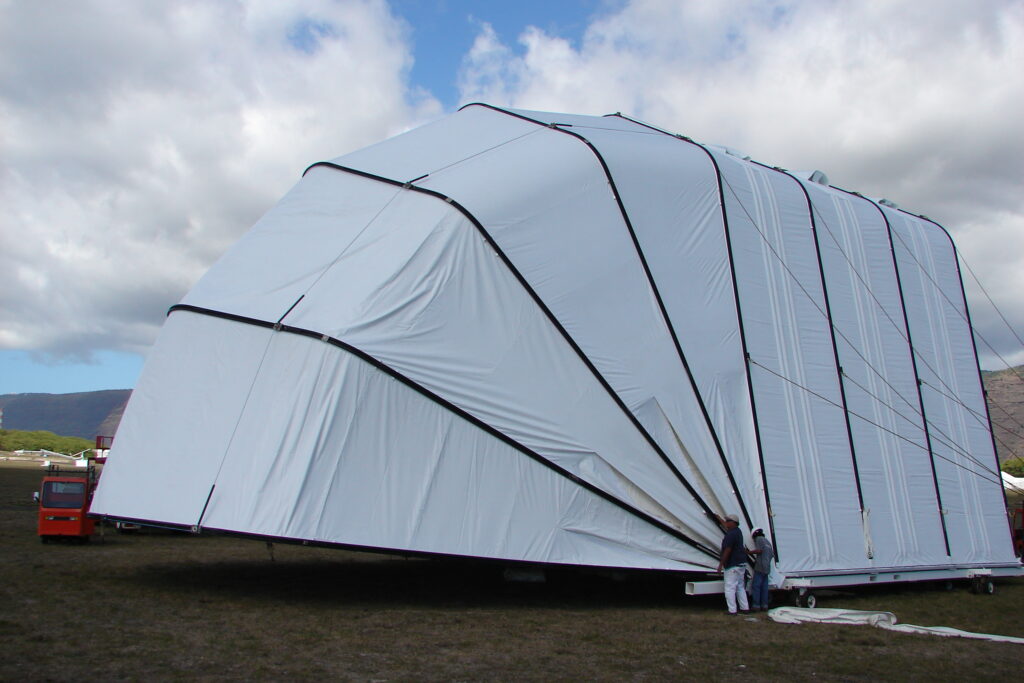
When it comes to clamshell building construction, most problems do not happen overnight.
In fact, many of the issues that eventually lead to repairs, structural concerns, shortened lifespan, or operational headaches often begin during the original installation process.
The challenge is that many construction mistakes are not immediately obvious.
A structure may look perfectly fine after installation, only for problems to surface months—or even years—later.
For aircraft hangars, military facilities, industrial operations, and tension fabric structures, proper construction matters.
Small details during installation can affect:
- Long-term durability
- Structural performance
- Weather resistance
- Maintenance costs
- Safety
- Operational reliability
After more than 30 years working with clamshell buildings and clear-span tension fabric structures, Oilcanners Construction Consulting has seen both successful installations and avoidable mistakes. From military hangars and aircraft facilities to refurbishment projects, inspections, relocation, and field advisory work, one thing becomes clear over time:
Doing it right the first time usually costs far less than fixing mistakes later.
In this guide, we will cover some of the most common mistakes seen during clamshell building construction, why they matter, and how experienced oversight can help avoid long-term problems.
Why Clamshell Building Construction Is Different
One of the biggest misconceptions about clamshell buildings is that they are simple.
Because tension fabric structures often go up faster than traditional buildings, some people assume installation is straightforward.
The reality is very different.
A clamshell building depends on:
- Structural alignment
- Engineering requirements
- Proper anchoring
- Correct membrane tension
- Site conditions
- Manufacturer specifications
- Long-term environmental performance
Unlike conventional construction, tension fabric structures operate within specific tolerances.
That means precision matters.
What may seem like a small shortcut during construction may eventually affect the performance of the entire building.
Mistake #1: Treating a Clamshell Building Like Traditional Construction
One of the most common problems is assuming general construction experience automatically translates into expertise with tension fabric systems.
It does not.
A clamshell building is fundamentally different from a traditional structure.
Aircraft hangars, military support facilities, and clear-span buildings require specialized understanding.
Proper installation depends on:
- Structural sequencing
- Membrane performance
- Alignment precision
- Manufacturer requirements
- Long-term wear considerations
Experience matters.
Oilcanners Construction Consulting has experience working with multiple clamshell systems and manufacturers, including CB-designed systems and structures such as Bigtop, Shasta, and Celina.
Mistake #2: Poor Site Planning
Many long-term problems begin before construction even starts.
Site conditions matter.
Factors such as:
- Ground stability
- Drainage
- Environmental exposure
- Wind considerations
- Access needs
- Anchoring requirements
all influence long-term performance.
Ignoring site realities may create problems that are difficult—or expensive—to correct later.
Experienced planning often prevents avoidable issues.
Mistake #3: Improper Structural Alignment
Small alignment issues may not always look serious at first.
However, over time, improper structural alignment can affect:
- Membrane performance
- Structural stress
- Hardware wear
- Weather resistance
- Overall durability
Experienced oversight during installation helps reduce the risk of future problems.
Precision matters more than many people realize.
Mistake #4: Incorrect Fabric Tension
This is one of the biggest issues seen in tension fabric structures.
Membrane systems are designed to operate under specific engineering tolerances.
Improper fabric tension may eventually contribute to:
- Premature wear
- Sagging
- Water pooling
- Weather performance issues
- Shortened membrane lifespan
Tension fabric systems are called “tension” structures for a reason.
Proper membrane performance matters.
Mistake #5: Cutting Corners on Materials or Components
Not all replacement parts or materials are created equal.
Using lower-quality components—or parts that do not meet intended specifications—may affect long-term reliability.
Oilcanners Construction Consulting works directly with engineering support and uses high-quality components manufactured in-house or sourced to meet required standards when appropriate.
In many situations, quality materials reduce maintenance problems later.
Mistake #6: Skipping Experienced Oversight
Not every organization needs a fully turnkey construction crew.
However, many projects benefit from experienced field advisory support.
This is especially true for:
- Aircraft hangars
- Military facilities
- Specialized operations
- Large-span structures
- Complex installations
Sometimes the difference between a successful project and future problems comes down to having experienced eyes involved during construction.
Oilcanners has extensive experience providing field advisory services, supervising crews, training personnel, and helping ensure clamshell buildings are constructed according to intended design standards.
Mistake #7: Ignoring Long-Term Maintenance Planning
Construction is only the beginning.
Even well-built clamshell buildings require:
- Routine inspections
- Preventative maintenance
- Hardware checks
- Membrane evaluation
- Repair planning
Long-term performance depends on how the structure is maintained after installation.
Many costly repairs could have been avoided through earlier inspections.
Why Experience Matters During Construction
A clamshell building is a major investment.
Whether used for aviation, military operations, industrial storage, or equipment protection, owners want confidence that the structure will perform as intended.
That confidence often comes from experience.
Oilcanners Construction Consulting brings more than 30 years of hands-on experience working with clamshell buildings and tension fabric structures across military, aviation, industrial, and international environments.
Past projects have included:
- Military aviation support
- Aircraft hangars
- NASA-related projects
- Lockheed Martin aviation support
- Military personnel training
- Inspections and refurbishment
- Relocation and reconstruction projects.
Experience does not guarantee perfection.
But it often helps avoid expensive mistakes.
Frequently Asked Questions About Clamshell Building Construction
What is the biggest mistake during clamshell building construction?
Improper installation, poor alignment, and incorrect membrane tension are among the most common long-term issues.
Why does construction experience matter?
Tension fabric structures operate differently than traditional buildings and require specialized expertise.
Are all clamshell buildings the same?
No. Different manufacturers, applications, and environments require different approaches.
Can construction mistakes be repaired later?
Sometimes, yes. However, correcting mistakes later is often more expensive than building correctly from the start.
Should clamshell buildings be inspected after installation?
Routine inspections are often recommended to monitor long-term performance and maintenance needs.
Looking for an Experienced Clamshell Building Construction Partner?
Whether you need turnkey construction, field advisory support, inspections, refurbishment, or help evaluating an existing structure, experience matters.
Oilcanners Construction Consulting brings decades of hands-on experience helping ensure clamshell buildings are built, repaired, and maintained as designed.
Contact Oilcanners Construction Consulting today to discuss your project or request a quote.
