
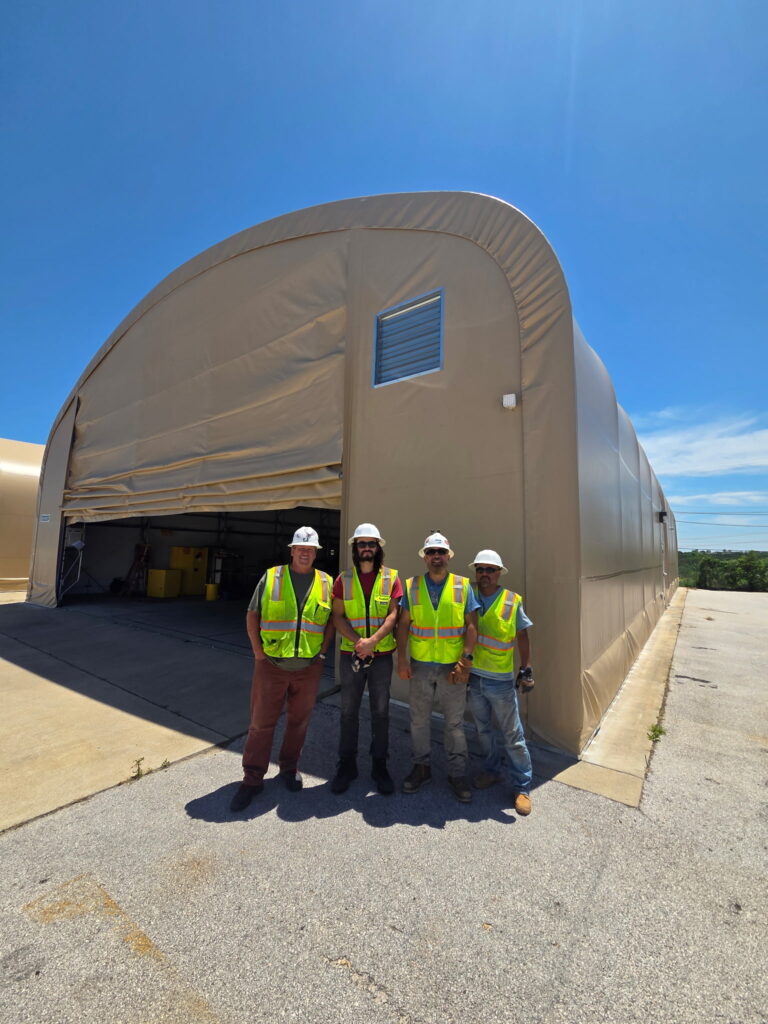
What Is a Clamshell Building? Benefits, Uses, Costs & Installation Guide
If you work in aviation, military operations, industrial construction, or large equipment storage, there is a good chance you have seen a clamshell building before—even if you did not know the technical name for it.
Clamshell buildings are commonly used for aircraft hangars, equipment protection, maintenance facilities, military operations, and industrial storage because they offer a practical solution when speed, flexibility, and large clear-span space are needed.
But while these structures may appear straightforward from the outside, there is much more involved than simply erecting steel framing and stretching fabric.
The reality is that proper installation, inspection, repair, maintenance, and long-term performance of a clamshell building depends heavily on experience.
Over the years, Oilcanners Construction Consulting has worked on clamshell and tension fabric structures across aviation, military, and industrial applications—including aircraft hangars, inspections, refurbishment projects, deconstruction, relocation, and field advisory work in demanding environments. That experience matters because these structures are only as good as how they are designed, assembled, maintained, and repaired.
In this guide, we will explain what clamshell buildings are, how they are commonly used, their benefits, what owners should know before investing in one, and why proper expertise makes such a difference over the life of the structure.
What Is a Clamshell Building?
A clamshell building is a type of clear-span, metal-framed tension fabric structure designed to provide large protected spaces without interior support columns getting in the way.
These buildings are often covered with a durable tensioned fabric membrane stretched over a structural frame system. Because of their size, versatility, and speed of deployment, clamshell buildings are widely used where traditional construction may be too slow, too restrictive, or unnecessarily expensive.
Unlike many conventional buildings, clamshell structures are built to maximize open interior space.
That means:
- More room for aircraft
- Better maneuverability for large equipment
- Flexible storage layouts
- Efficient maintenance operations
- Greater adaptability over time
Many people also refer to these structures as:
- Aircraft fabric hangars
- Tension fabric structures
- Clear-span fabric buildings
- Temporary or relocatable hangars
- Industrial fabric structures
While the names may vary, the purpose is usually the same: create durable, functional covered space quickly and efficiently.
Where Are Clamshell Buildings Commonly Used?
One reason clamshell buildings have become so popular is their flexibility across industries.
Aviation and Aircraft Hangars
One of the most common uses for clamshell buildings is aviation.
Aircraft owners, military organizations, and aviation contractors frequently use clamshell hangars because they provide the clear-span space necessary to safely house and service aircraft.
Without interior columns disrupting movement, crews can work more efficiently while protecting expensive aircraft from weather exposure.
These structures are commonly used for:
- Aircraft storage
- Maintenance operations
- Flight support
- Temporary aviation facilities
- Military aviation projects
Oilcanners Construction Consulting has extensive experience supporting aircraft hangar projects and tension fabric facilities, including advisory and construction support roles in specialized aviation environments.
Military Operations
Clamshell buildings are frequently used by military organizations because they can be deployed quickly, adapted to changing operational needs, and relocated when necessary.
Military operations often require structures for:
- Aircraft maintenance
- Equipment storage
- Vehicle servicing
- Mission support
- Temporary facilities
- Training environments
Unlike permanent construction, tension fabric structures offer flexibility when locations or operational needs shift.
Oilcanners has experience supporting military-related clamshell projects, including construction oversight, inspections, training personnel, refurbishment, and maintenance in highly demanding environments. Past work includes projects involving U.S. military teams, international military operations, and aviation support facilities.
Industrial and Commercial Applications
Outside aviation and military use, clamshell buildings are increasingly used for commercial and industrial applications.
Businesses often use them for:
- Equipment storage
- Fleet protection
- Construction staging
- Warehousing
- Maintenance bays
- Material storage
- Manufacturing overflow space
For many operations, speed matters.
Instead of waiting on lengthy conventional construction schedules, clamshell buildings can provide operational space much faster while maintaining durability and flexibility.
Why Businesses and Organizations Choose Clamshell Buildings
There is a reason clamshell buildings continue to grow in popularity across multiple industries.
Here are some of the biggest advantages.
Large Clear-Span Interior Space
One of the biggest benefits of a clamshell building is the clear-span design.
Traditional structures often rely on interior support columns that limit usable space.
Clamshell buildings eliminate many of those obstacles, creating large uninterrupted interiors.
This matters for operations involving:
- Aircraft movement
- Oversized equipment
- Maintenance access
- Material handling
- Flexible workspace configurations
For aviation and industrial operations, unobstructed space is often essential.
Faster Deployment Compared to Traditional Construction
Another major benefit is speed.
In many cases, clamshell buildings can be installed significantly faster than traditional buildings.
That speed can make a major difference for:
- Expanding operations
- Military readiness
- Emergency response
- Construction staging
- Temporary operational needs
However, faster deployment should never mean shortcuts.
The long-term success of a clamshell structure often comes down to how well it was installed and whether proper procedures were followed during construction.
This is where experienced oversight becomes valuable.
Oilcanners Construction Consulting works directly with engineering support and manufacturer requirements to ensure facilities are constructed and repaired according to design specifications—not simply assembled as quickly as possible.
Relocatable and Adaptable
Unlike permanent buildings, many clamshell structures can be deconstructed, moved, and reassembled.
That flexibility is one reason they are so widely used in military and industrial environments.
As operational needs change, facilities can often be repositioned or relocated rather than replaced entirely.
However, relocation is not as simple as taking apart a structure and putting it back together.
Proper deconstruction, labeling, inspection, containerization, and reconstruction all matter.
Oilcanners has experience supporting clamshell relocation and refurbishment projects, including specialized deconstruction work in challenging environments.
Long-Term Cost Efficiency
For many organizations, clamshell buildings can also make financial sense.
Potential advantages may include:
- Faster project timelines
- Reduced operational disruption
- Adaptability
- Reusability
- Lower long-term replacement costs
That said, the lowest upfront cost is not always the best long-term decision.
A poorly constructed or improperly repaired structure often becomes far more expensive over time.
Experience, quality materials, and proper maintenance usually save money in the long run.
What Impacts the Cost of a Clamshell Building?
One of the most common questions people ask is:
“How much does a clamshell building cost?”
The answer depends on several factors.
Variables that influence pricing include:
Size and Span Requirements
Larger buildings naturally require more materials, engineering, and labor.
Intended Use
An aircraft hangar may have very different requirements than an industrial storage facility.
Site Conditions
Ground preparation, anchoring requirements, weather conditions, and access can all affect cost.
Engineering Requirements
Different environments require different structural considerations.
Installation Complexity
Some projects require specialized crews, equipment, training, or field advisory services.
Because every project is different, experienced evaluation early in the process often helps owners avoid costly surprises later.
Why Proper Construction and Expertise Matter
Clamshell buildings may look simple from the outside, but successful long-term performance depends on precision.
Common problems often stem from:
- Improper installation
- Poor alignment
- Incorrect fabric tension
- Inexperienced crews
- Deferred maintenance
- Improper repairs
- Low-quality replacement components
These mistakes may not always show up immediately.
In many cases, issues develop gradually and become expensive problems later.
That is one reason experienced consultation, inspections, and field oversight can make such a difference.
Oilcanners Construction Consulting has experience working across multiple clamshell building models and manufacturers, including CB-designed systems and tension fabric structures such as Bigtop, Shasta, and Celina systems. Their team also provides inspections, repairs, refurbishment, maintenance, crew training, and turnkey construction support.
Can Existing Clamshell Buildings Be Repaired or Refurbished?
Yes—many existing structures can be repaired, upgraded, or refurbished.
Depending on the condition of the structure, common services may include:
- Structural inspections
- Replacement components
- Fabric repairs
- Refurbishment
- Reconfiguration
- Relocation
- Maintenance planning
For organizations trying to extend the life of an existing facility, inspections often help determine whether repair or replacement makes the most sense.
Frequently Asked Questions About Clamshell Buildings
How long do clamshell buildings last?
Lifespan depends on installation quality, environmental conditions, maintenance schedules, and repair history. Proper inspections and preventative maintenance often help extend the useful life of the structure.
Are clamshell buildings permanent?
Some are temporary, while others remain operational for many years. Many structures are designed to be relocatable if operational needs change.
Can clamshell buildings be relocated?
Yes. Many can be deconstructed and reassembled, but relocation should be handled by experienced professionals familiar with proper procedures.
Are clamshell buildings good for aircraft hangars?
Yes. Their clear-span design makes them especially useful for aircraft storage and maintenance operations.
Do clamshell buildings require maintenance?
Like any facility, regular inspections and maintenance are recommended to help identify wear, structural concerns, and replacement needs before larger issues develop.
Looking for Help With a Clamshell Building?
Whether you need a clamshell building installed, repaired, inspected, refurbished, relocated, or maintained, experience matters.
Oilcanners Construction Consulting brings more than 30 years of hands-on experience working with clear-span, metal-framed tension fabric structures in aviation, military, and industrial environments. From field advisory services and turnkey support to inspections, repairs, maintenance, and crew training, the focus remains the same: helping ensure every structure is built, repaired, and maintained as designed.
Contact Oilcanners Construction Consulting today to discuss your project or request a quote.
