
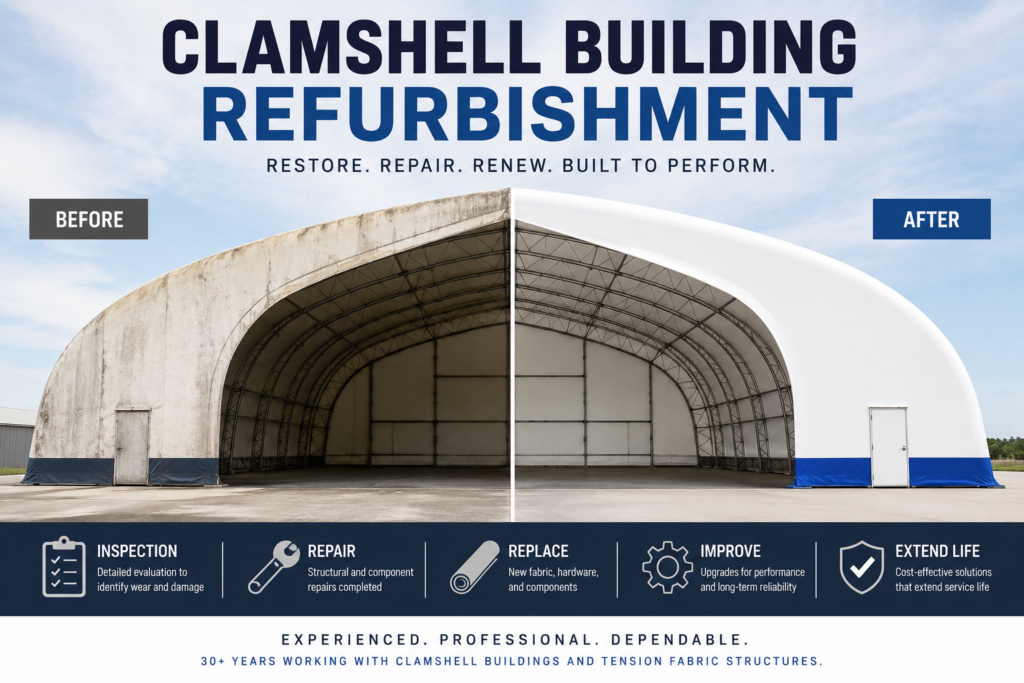
For many organizations, a clamshell building is a long-term investment.
Whether used as an aircraft hangar, military support structure, maintenance facility, industrial workspace, or equipment shelter, these buildings are designed to perform in demanding environments for years.
But eventually, owners often face a difficult question:
“Do we repair the structure, refurbish it, or replace it completely?”
In many situations, replacement is not the only option.
Depending on the condition of the facility, clamshell building refurbishment may significantly extend the life of an existing structure while avoiding the cost and disruption of full replacement.
The challenge is knowing when refurbishment makes sense—and when it does not.
That decision often comes down to experience, inspections, structural condition, and understanding what can realistically be repaired or upgraded.
At Oilcanners Construction Consulting, refurbishment is not guesswork. With more than 30 years of hands-on experience working on clear-span tension fabric structures—including inspections, repairs, aircraft hangars, military facilities, relocations, maintenance, and refurbishment projects—the company has worked with both aging structures and facilities still capable of years of continued service. One thing becomes clear over time:
Many clamshell buildings still have useful life remaining when properly evaluated and refurbished.
In this guide, we will explain what clamshell building refurbishment involves, signs refurbishment may make sense, and when repair may be a better investment than replacement.
What Is Clamshell Building Refurbishment?
A clamshell building refurbishment generally involves restoring, repairing, improving, or reconfiguring an existing structure to improve long-term performance.
Refurbishment may include:
- Structural repairs
- Fabric membrane evaluation or replacement
- Hardware replacement
- Component upgrades
- Structural adjustments
- Corrosion repair
- Reconfiguration
- Long-term maintenance improvements
Every structure is different.
Some buildings only need minor upgrades.
Others may benefit from more extensive refurbishment to extend lifespan or improve operational performance.
The first step is understanding the condition of the facility.
When Does Refurbishment Make Sense?
Not every structure needs replacement.
In many situations, refurbishment may make financial and operational sense.
The Structure Is Still Structurally Sound
If the main structural system remains in good condition, refurbishment may be a practical option.
A professional inspection often helps determine:
- Structural integrity
- Fabric condition
- Hardware wear
- Repair needs
- Long-term viability
Sometimes a facility simply needs targeted repairs—not a complete replacement.
The Building Still Fits Operational Needs
Owners sometimes assume aging automatically means replacement.
But if the facility still supports operational requirements, refurbishment may help extend performance without starting over.
This is especially common with:
- Aircraft hangars
- Military support facilities
- Equipment shelters
- Maintenance operations
- Industrial storage structures
Relocation Is Being Considered
In many cases, refurbishment happens during relocation.
A building may be:
- Deconstructed
- Containerized
- Transported
- Repaired
- Reassembled
Relocation often creates a natural opportunity to evaluate and improve structural condition before reinstallation.
Oilcanners Construction Consulting has extensive experience supporting deconstruction, refurbishment, and reconstruction projects involving clamshell buildings and aviation facilities.
Common Signs a Clamshell Building May Need Refurbishment
Many refurbishment projects begin with visible signs of wear.
Some common indicators include:
Aging Fabric Membranes
Over time, environmental exposure may affect fabric performance.
Signs may include:
- Wear
- Sagging
- Small tears
- UV deterioration
- Water pooling concerns
In many situations, membrane-related issues can be addressed without replacing the entire facility.
Hardware Wear
Structural components naturally experience wear over time.
Maintenance inspections often identify:
- Loose fasteners
- Worn hardware
- Corrosion concerns
- Structural stress points
Small upgrades often help improve long-term performance.
Repeated Repair Issues
If the same issues continue appearing, it may be time for a broader refurbishment evaluation.
Sometimes multiple smaller repairs point toward larger system wear.
Changes in Operational Needs
Some facilities benefit from reconfiguration during refurbishment.
Depending on the project, structures may be adapted to better meet evolving operational requirements.
Refurbishment vs Replacement: What Should Owners Consider?
One of the biggest questions owners ask is:
“When does replacement make more sense?”
There is no universal answer.
However, several factors usually matter.
Structural Condition
If the core structure remains sound, refurbishment may often make sense.
Long-Term Goals
Owners should consider:
- Future operational needs
- Facility lifespan expectations
- Budget priorities
- Expansion plans
Repair Costs vs Replacement Costs
In some situations, refurbishment provides meaningful cost savings.
Other times, replacement may offer better long-term value.
A professional inspection usually helps clarify the best path forward.
Downtime and Operational Disruption
Refurbishment may sometimes reduce operational disruption compared to complete replacement.
Every facility is different.
Why Experience Matters During Refurbishment
Refurbishment is different from new construction.
The process requires understanding:
- Aging wear patterns
- Structural condition
- Repair feasibility
- Fabric performance
- Long-term maintenance considerations
- Manufacturer specifications
Oilcanners Construction Consulting has experience working across multiple clamshell systems and manufacturers, including CB-designed systems, Bigtop, Shasta, and Celina structures.
The company also provides:
- Detailed inspections
- Maintenance recommendations
- Repair evaluations
- Relocation support
- Refurbishment planning
- Long-term facility support.
Experience often helps owners avoid replacing structures prematurely.
Frequently Asked Questions About Clamshell Building Refurbishment
Can clamshell buildings be refurbished?
In many cases, yes. Structural condition, maintenance history, and operational goals help determine suitability.
Is refurbishment cheaper than replacement?
Sometimes. Every project is different and depends on repair needs and long-term goals.
What parts of a clamshell building can be refurbished?
Fabric systems, hardware, structural components, and operational upgrades may often be addressed.
Should older aircraft hangars be refurbished?
In many situations, refurbishment may significantly extend useful life.
How do I know if my structure should be repaired or replaced?
A detailed inspection is often the best place to start.
Need Help Evaluating a Clamshell Building?
Whether you are deciding between refurbishment or replacement, planning a relocation, or evaluating an aging aircraft hangar or clamshell structure, experience matters.
Oilcanners Construction Consulting brings more than 30 years of hands-on experience working with clamshell buildings and tension fabric structures across aviation, military, and industrial environments. From inspections and repairs to refurbishment, relocation, and long-term facility support, the goal remains the same: helping structures continue performing as designed.
Contact Oilcanners Construction Consulting today to discuss your facility or request an evaluation.
